Retaining Walls & Concrete Masonry
Control erosion, create level spaces, and add functional structure to your property with professionally built retaining walls.
Solve Slope and Drainage Problems
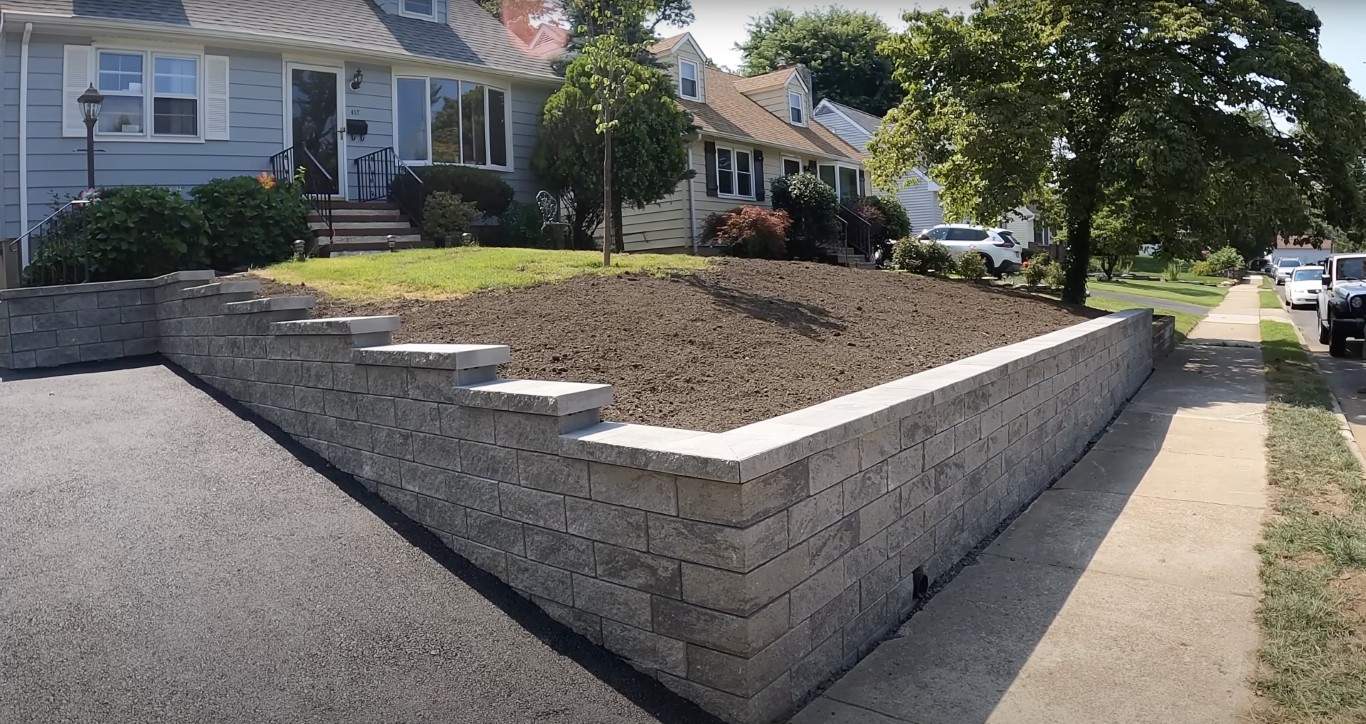
Retaining walls do important work on your property. They hold back soil on slopes, prevent erosion, and create usable flat areas where you only had hillsides before. We build retaining walls throughout Champaign, Urbana, and Savoy that solve real problems while adding visual interest to your landscape. A well-designed wall can transform an unusable slope into space for a patio, garden beds, or lawn areas.
Many properties in our area have drainage issues related to slopes and grading. Water runs downhill and can wash away soil, flood low areas, or damage foundations. Retaining walls work with proper drainage systems to control water flow and protect your property. We design walls that manage both the soil load and water pressure to ensure they stay stable year after year.
You might need a retaining wall if you have soil washing away on slopes, limited flat space in your yard, or drainage problems related to grade changes. Some homeowners want walls to create terraced garden beds or define different areas of their landscape. Whatever your reason, we start by understanding your specific situation and goals, then design a wall system that solves your problem effectively.
Retaining Wall Options and Materials
We build retaining walls using different materials and methods depending on your needs, budget, and aesthetic preferences. Concrete block walls offer durability and come in many styles and colors. These modular systems install efficiently and provide excellent strength for most residential applications. Poured concrete walls give you a solid, monolithic structure that handles high loads and tall heights.
What We Build
- Concrete block retaining walls in various styles from natural stone look to modern clean lines
- Poured concrete walls for maximum strength and custom designs
- Tiered and terraced wall systems that create multiple level changes
- Garden walls and raised planting beds built to last
The right choice depends on wall height, soil conditions, and how the wall fits with your existing landscape. Short decorative walls under three feet have different requirements than tall structural walls. We will explain your options and recommend the approach that balances function, appearance, and budget for your specific project.
Engineered for Strength and Stability
Building a retaining wall that lasts requires proper engineering. The wall must resist soil pressure, handle water loads, and stay stable through freeze and thaw cycles. We do not just stack blocks and hope they stay put. Every wall starts with excavation and a proper foundation base. For taller walls, we install engineered drainage systems behind the wall to relieve water pressure.
Critical Installation Steps
Foundation preparation makes all the difference. We excavate below the frost line and install a compacted gravel base that stays stable and drains well. The first course of blocks or the concrete footing must sit level and solid. Any settling or movement at the base affects the entire wall structure.
As we build the wall, we install drainage pipe and gravel behind it. This lets water drain away rather than building pressure against the wall. We also use proper backfill materials that allow drainage while providing support. For walls over certain heights, we add reinforcement like geogrids that tie the wall to the soil mass behind it.
The result is a wall that does its job without requiring constant maintenance or eventual failure. Many of our local customers have retaining walls that look as good and perform as well years after installation as they did the day we completed them. Proper engineering and installation make that possible.